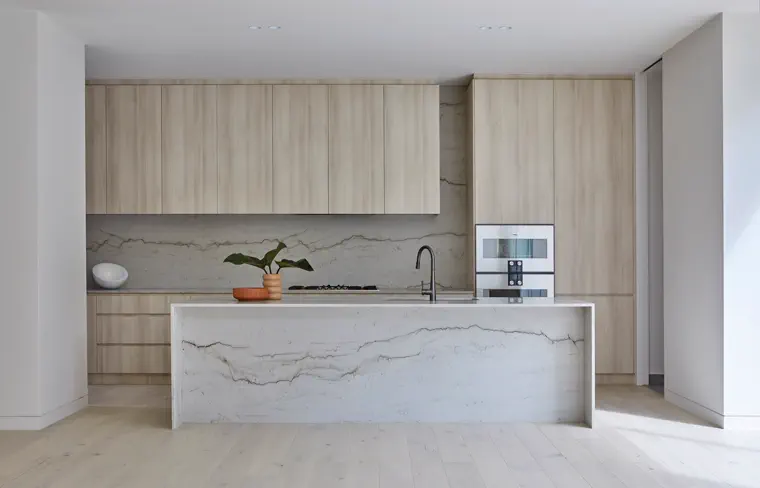

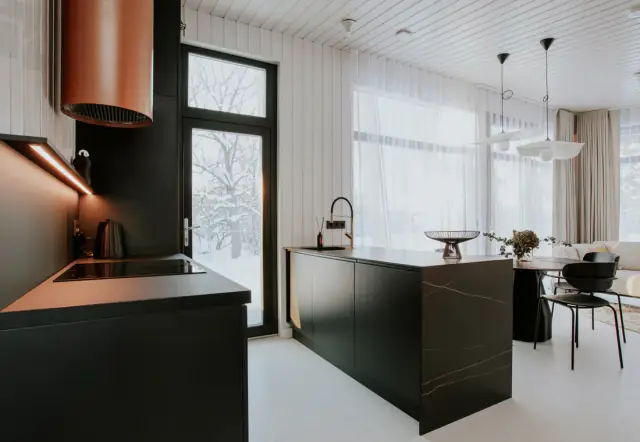
Short answer: A professional kitchen remodel in Northern Wisconsin commonly falls into three planning levels: $12,000-$28,000 for a targeted refresh, $28,000-$62,000 for a same-footprint cabinet and surface remodel, and $60,000-$115,000+ for a full gut, layout change, custom cabinetry, upgraded electrical, or lake-home project. Larger Western Michigan metro projects can trend higher. The cabinets, layout, electrical, plumbing, and finish choices drive the budget more than the room label.
This planning article is for homeowners comparing kitchen, bathroom, shower, and remodeling options in Northern Wisconsin and Western Michigan. It uses current regional cost benchmarks, state permit sources, and building-science guidance on ventilation and moisture so the project can be scoped before a sales call.
Kitchen remodel planning ranges
Kitchen remodeling costs are easy to misunderstand because the word remodel can mean a cabinet paint refresh, a full cabinet replacement, or a structural rework that touches plumbing, electrical, flooring, openings, and trim. For Northern Wisconsin and Western Michigan homes, the most reliable way to budget is by scope.
| Scope | Planning range | Best fit |
|---|---|---|
| Targeted refresh | $12,000-$28,000 | Painted or refaced cabinets, counters, backsplash, sink/faucet, lighting, and small repairs without changing the layout. |
| Same-footprint remodel | $28,000-$62,000 | New cabinets, counters, backsplash, flooring tie-ins, appliance fit, lighting, and plumbing/electrical updates with the kitchen staying in place. |
| Full gut kitchen | $60,000-$115,000+ | Layout changes, new circuits, moved plumbing, structural opening, custom cabinetry, higher-end appliances, and whole-room finish work. |
| Lake home or custom project | $90,000-$160,000+ | High-finish kitchens, difficult access, older framing, second-home schedules, large islands, window/door changes, and premium surfaces. |
What the 2025 regional benchmarks say
The 2025 Cost vs. Value Report lists the East North Central region at about $27,005 for a minor midrange kitchen remodel and about $83,113 for a major midrange kitchen remodel. Milwaukee is slightly higher at about $27,625 for a minor kitchen and $87,115 for a major midrange kitchen. Northern Wisconsin should not automatically be priced like Milwaukee. Those figures are useful reality checks and upper comparison points, while smaller-market projects can be lower when access, scope, and selections are controlled.
A minor kitchen remodel can perform well at resale because it improves the room buyers notice first without turning the whole house into a luxury custom project. A major kitchen can still be worth doing, but the value is often daily use, storage, workflow, durability, and how long the owner plans to stay.
That distinction matters in Northern Wisconsin and Western Michigan. A family kitchen in a year-round home, a cabin kitchen near a lake, and a Grand Rapids kitchen in an older house may all need different levels of investment even if they photograph similarly when finished.
A better way to plan a kitchen budget
Start by deciding which problem the remodel must solve: storage, traffic, cooking workflow, seating, daylight, resale, aging-in-place, or a failing old kitchen. The budget should follow that problem. If the room works but looks tired, a same-layout update may be smarter than a wall removal. If the room is unsafe or dysfunctional, cosmetic work may waste money.
- Confirm the footprint. Decide whether the sink, range, refrigerator, doorways, and island are staying or moving.
- Choose cabinet level before counters. Cabinet quality, lead time, and layout precision drive the rest of the project.
- Price the mechanical work honestly. Electrical, plumbing, and venting should not be treated as afterthought allowances.
- Hold a contingency. For older homes and lake properties, 10%-15% is a practical planning buffer.
The goal is not to spend the most. The goal is to spend where the kitchen will be hard to change later: layout, cabinets, electrical, plumbing, ventilation, and durable surfaces.
How to read a kitchen remodel budget
A kitchen budget should separate the durable bones from the finish choices. Cabinets, electrical, plumbing, ventilation, and layout decisions are hard to change later. Hardware, pendants, faucet style, and backsplash pattern are easier to scale. Good planning keeps the expensive permanent decisions from being made by accident.
| Budget area | Typical impact | How to control it |
|---|---|---|
| Cabinetry and layout | Usually one of the largest line items because it sets storage, appliance fit, and installation precision. | Keep a simple footprint, avoid unnecessary custom pieces, and finalize appliance specs early. |
| Electrical and lighting | Older kitchens often need more circuits, safer outlets, better switching, and undercabinet lighting. | Plan the appliance wall, island outlets, task lighting, and panel needs before cabinets are ordered. |
| Plumbing and ventilation | Moving a sink, dishwasher, gas line, or hood duct adds trades and inspection steps. | Keep services in place when possible and choose the hood location before cabinet drawings are final. |
| Counters and backsplash | Can swing widely based on slab choice, edge detail, tile pattern, and wall condition. | Use durable midrange materials and reserve premium selections for focal areas. |
| Flooring and transitions | Layout changes can expose flooring gaps or uneven subfloor at adjacent rooms. | Confirm cabinet footprint changes and floor height transitions before demolition. |
Layout decisions that affect cost the most
The cheapest kitchen plan is rarely the best plan, but the most expensive plan is not automatically better either. The best value usually comes from solving the daily friction without creating unnecessary structural or mechanical changes. For many Northern Wisconsin homes, that means improving storage, lighting, appliance clearances, and work zones while keeping the sink and main walls where they are.
Sink wall, range wall, window openings, structural walls, and finished floors that are still in good condition.
Pinch points, blocked appliance doors, poor prep space, unsafe wiring, dark counters, and no pantry storage.
Refrigerator depth, range specs, dishwasher clearance, hood duct path, island walkway, and door swing.
Boot traffic, bulk groceries, holiday cooking, darker months, and guests gathering near the kitchen.
Western Michigan kitchens can have similar issues in older housing stock: plaster walls, narrow service chases, older electrical, and floor transitions that do not reveal themselves until cabinets are removed. A site review should look for those conditions before promising a tight number.
A practical kitchen remodel timeline
A kitchen remodel usually takes longer to plan than homeowners expect because cabinets, counters, appliances, and trade sequencing all depend on each other. Ordering cabinets before confirming appliances can cause fit problems. Demolishing before selections are locked can leave the family without a kitchen while everyone waits for a product decision.
Measure, confirm appliance direction, evaluate electrical and plumbing, and decide whether walls or services move.
Finalize cabinets, counters, sink, faucet, appliances, backsplash, lighting, hardware, and finish schedule.
Remove old kitchen, repair walls or floors, update electrical, plumbing, ventilation, and inspections.
Cabinets, template, counters, backsplash, trim, fixtures, appliances, touchups, and punch list.
For a family living in the home, the plan should also include a temporary kitchen, dust control, refrigerator access, and a clear date when the sink will be unavailable. Those details matter more than homeowners expect once construction starts.
Kitchen estimate prep
Turn the kitchen article into a cleaner estimate
A kitchen quote gets better when the contractor can see the layout, appliance direction, and budget priorities before the first visit. Use this list to turn the article into a practical planning packet for a Northern Wisconsin or Western Michigan kitchen.Each wall, appliance locations, sink wall, island or peninsula, dining connection, and nearby entries.
What stays, what changes, gas or electric range, hood direction, refrigerator depth, dishwasher, microwave, and beverage storage.
Pantry gaps, blind corners, trash, small appliances, bulk groceries, lake-home supplies, and traffic pinch points.
Lowest disruption, best long-term layout, resale update, lake-home durability, or full custom kitchen.
Frequently Asked Questions
How much does a kitchen remodel cost in Northern Wisconsin?
A targeted refresh may run $12,000-$28,000, a same-footprint cabinet and surface remodel often runs $28,000-$62,000, and a full gut or custom kitchen can run $60,000-$115,000 or more.
Is a kitchen remodel worth it for resale?
A smaller, well-planned kitchen update often has stronger percentage return than an upscale custom kitchen. A major remodel can still be worth it when the owner values daily function and plans to stay.
What is the biggest cost driver in a kitchen remodel?
The biggest drivers are cabinetry, layout changes, electrical/plumbing work, appliances, and countertop/backsplash selections. Moving walls or services usually changes the budget more than changing finishes.
What is the best way to lower a kitchen remodel cost?
Keep the sink, range, main walls, and appliance locations where they are if the layout works. Then use practical cabinetry and finish choices instead of cutting electrical, plumbing, or ventilation scope.
How early should I choose appliances?
Choose appliances before cabinets are ordered. Refrigerator depth, range type, dishwasher clearance, microwave location, and hood requirements affect cabinet layout and electrical planning.
Sources and Method
Prices are planning ranges, not quotes. They combine published regional benchmarks with local remodeling scope logic. Final pricing depends on site conditions, product selections, trade availability, permits, and hidden conditions found during demolition.